
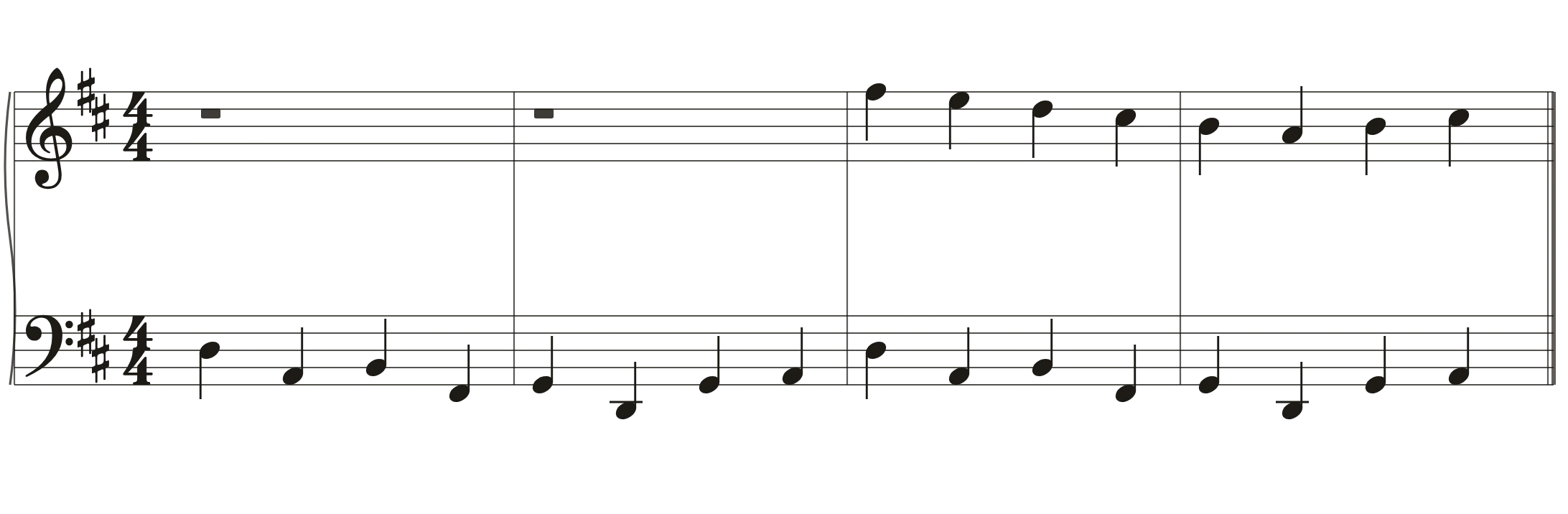
Eight bass notes repeated forever, with ever busier melodies above. A perfect piece for learning to keep the left hand steady.
The story
Johann Pachelbel was one of the leading organists in Germany. He taught Johann Christoph Bach, who in turn taught his younger brother, Johann Sebastian. The Canon was written for three violins over a repeating bass line, and was originally paired with a lively gigue.
For almost two centuries it was forgotten. It was first published in 1919, and only became famous after a 1968 recording by Jean-François Paillard’s orchestra, played slower and more romantically than Pachelbel probably intended.
Today it is the most popular wedding processional in the world, and its chord pattern has been borrowed by countless pop songs.
Three things to know
- The bass line is eight notes long and repeats 28 times in the original.
- A canon means the violins play the same melody, each starting two bars after the last, like a round.
- Nobody knows exactly when Pachelbel wrote it; guesses range from 1680 to 1706.
How to play it
The left hand never changes. Listen to how much variety the right hand can create over exactly the same eight notes.