
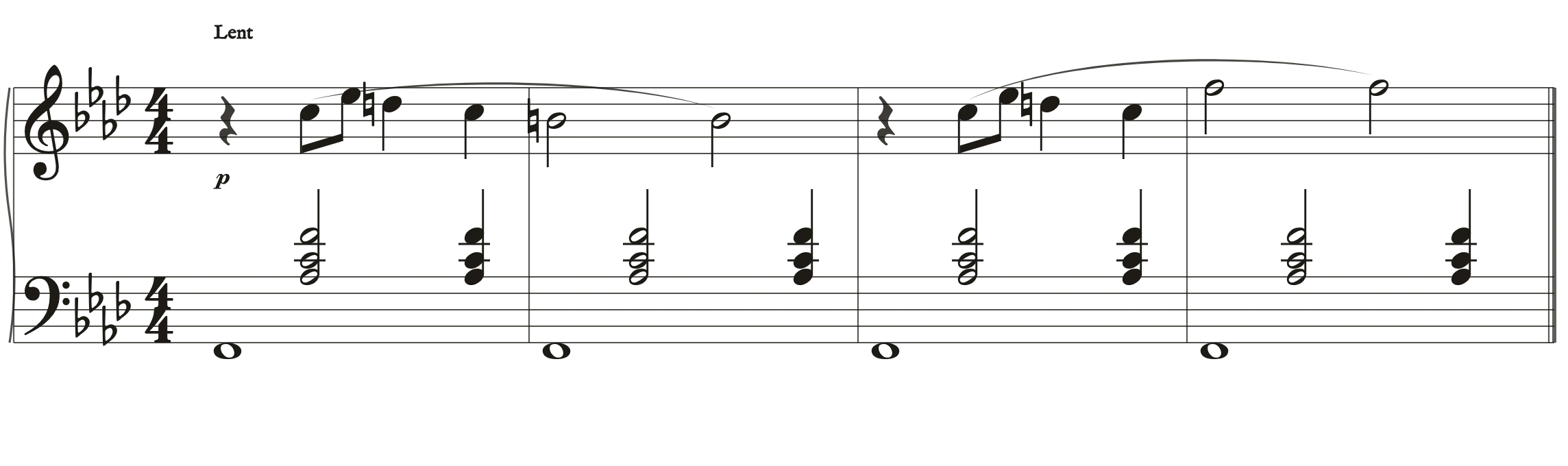
A strange, slow melody over a steady chord, written without bar lines, with instructions like “very shiny” and “question”.
The story
Satie wrote the first Gnossienne in 1890, two years after the Gymnopédies. The word was his own invention, perhaps from gnosis, hidden knowledge.
In the original there are no bar lines and no time signature. Instead of normal markings, Satie wrote odd advice to the player: “Très luisant” (very shiny), “Questionnez” (question), “Du bout de la pensée” (from the tip of the thought).
Two things to know
- Evensong groups the music into bars of four beats so it can follow you; the original has none.
- The melody uses an augmented second, a gap that gives it an Eastern, ancient sound.
How to play it
Keep the left hand perfectly steady, like a clock in an empty room, and let the melody wander freely above it.